



How EdTech Is Transforming Modern Education?
Educational technology (often called EdTech) refers to the use of digital tools, software, online courses, apps, and interactive platforms to enhance teaching and learning. It involves the systematic application of technological processes and resources to improve education outcomes, whether in-person, hybrid, smart classrooms, or remote environments. Its primary goal is to make education more accessible, engaging, personalized, and effective by integrating ICT (Information and Communication Technology) tools in the learning process.
Importance of Educational technology
Educational technology is important because it promotes inclusive education, enabling students from various backgrounds, including those in remote areas, to access quality learning materials and resources. It helps boost students’ creativity, engagement, communication skills, and knowledge retention by using multimedia presentations, virtual reality, AI-driven adaptive learning, and interactive apps. It also enables personalized learning experiences by tailoring instruction to individual student needs, supports worldwide collaboration, and bridges the gap between theoretical and practical education through simulations and virtual labs.
Examples of educational technology in practice include:
- Online courses and webinars that allow learners to study remotely.
- Virtual reality field trips that immerse students in historical or scientific environments.
- Adaptive learning platforms that adjust content based on a student’s performance.
- Collaboration tools like Google Classroom where students can work on projects together.
- Multimedia presentations in classrooms that stimulate engagement and understanding.
- Simulation software and virtual labs that provide practical experience in science and technical subjects.
In summary, educational technology transforms traditional education by enhancing engagement, widening access to resources, personalizing learning, and preparing students for a technology-driven future, making it a vital component of modern education systems.
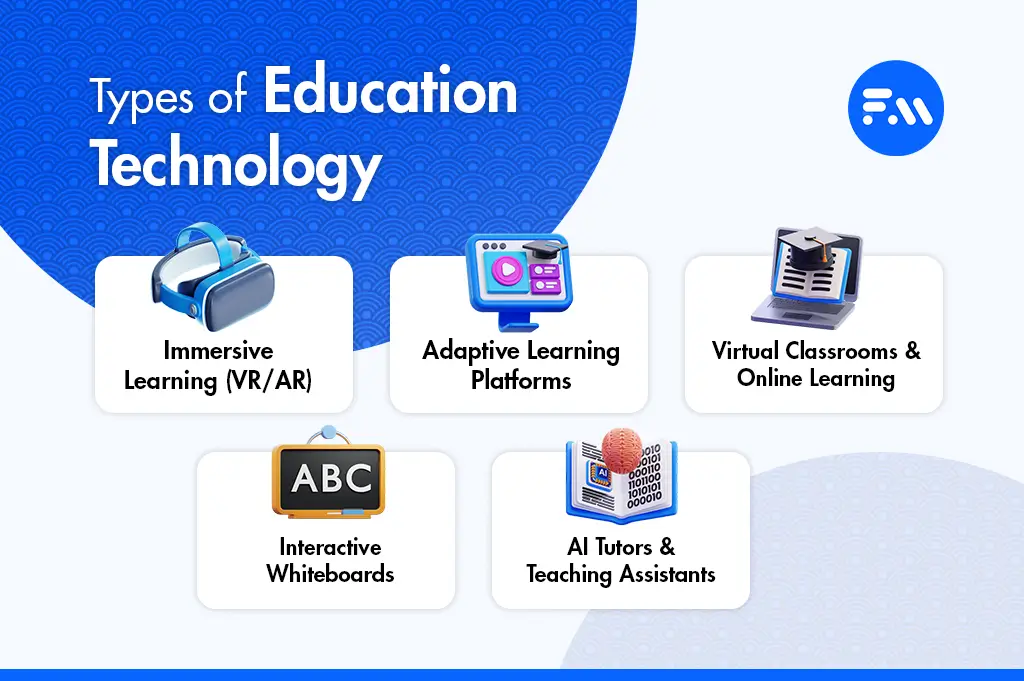
Here are five real-world applications of Educational Technology:
- Immersive Learning with Virtual and Augmented Reality (VR/AR): Students can take virtual field trips to historical sites or distant places and experience interactive career simulations, such as “a day in the life of a doctor.” VR/AR enhances engagement and helps in understanding complex concepts through immersive experiences.
- Adaptive Learning Platforms: Tools like Duolingo use AI to personalize language learning by adjusting difficulty according to the learner’s performance, keeping the engagement optimal and tailored to the student’s needs.
- Virtual Classrooms and Online Learning Platforms: These enable remote or hybrid classes, allowing students to attend lessons from any location, access course materials anytime, and collaborate with peers and teachers through video conferencing and shared digital workspaces.
- Interactive Whiteboards and Smart Boards: These are large touchscreen displays used in classrooms for interactive lessons, quizzes, and real-time student engagement, making the teaching process more dynamic and accessible.
- AI Tutors and Teaching Assistants: AI-powered tools like Khanmigo provide students with personalized academic assistance and help teachers prepare customized lesson plans, enhancing both independent and guided learning.
These applications demonstrate how educational technology enhances engagement, accessibility, and personalized learning in modern education